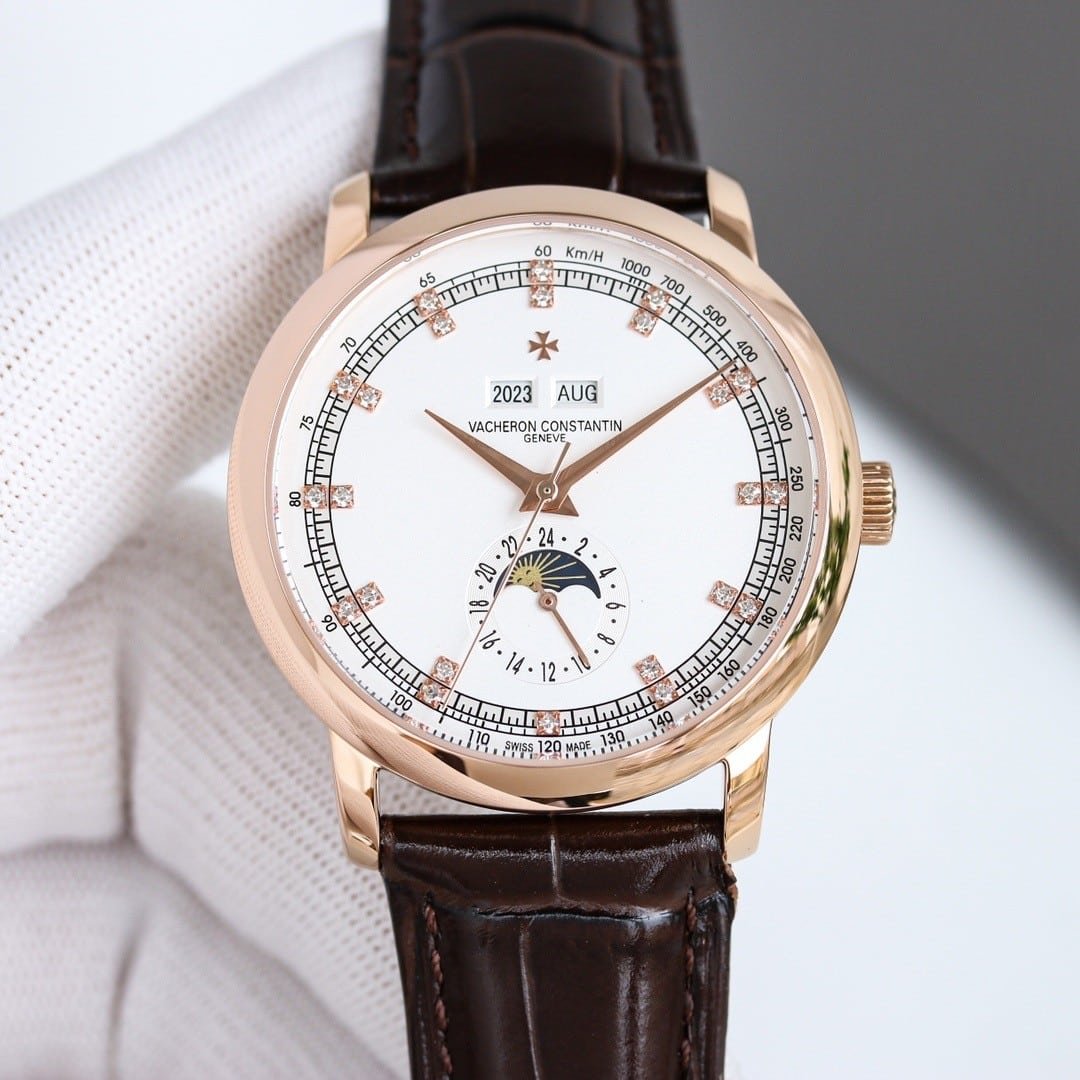
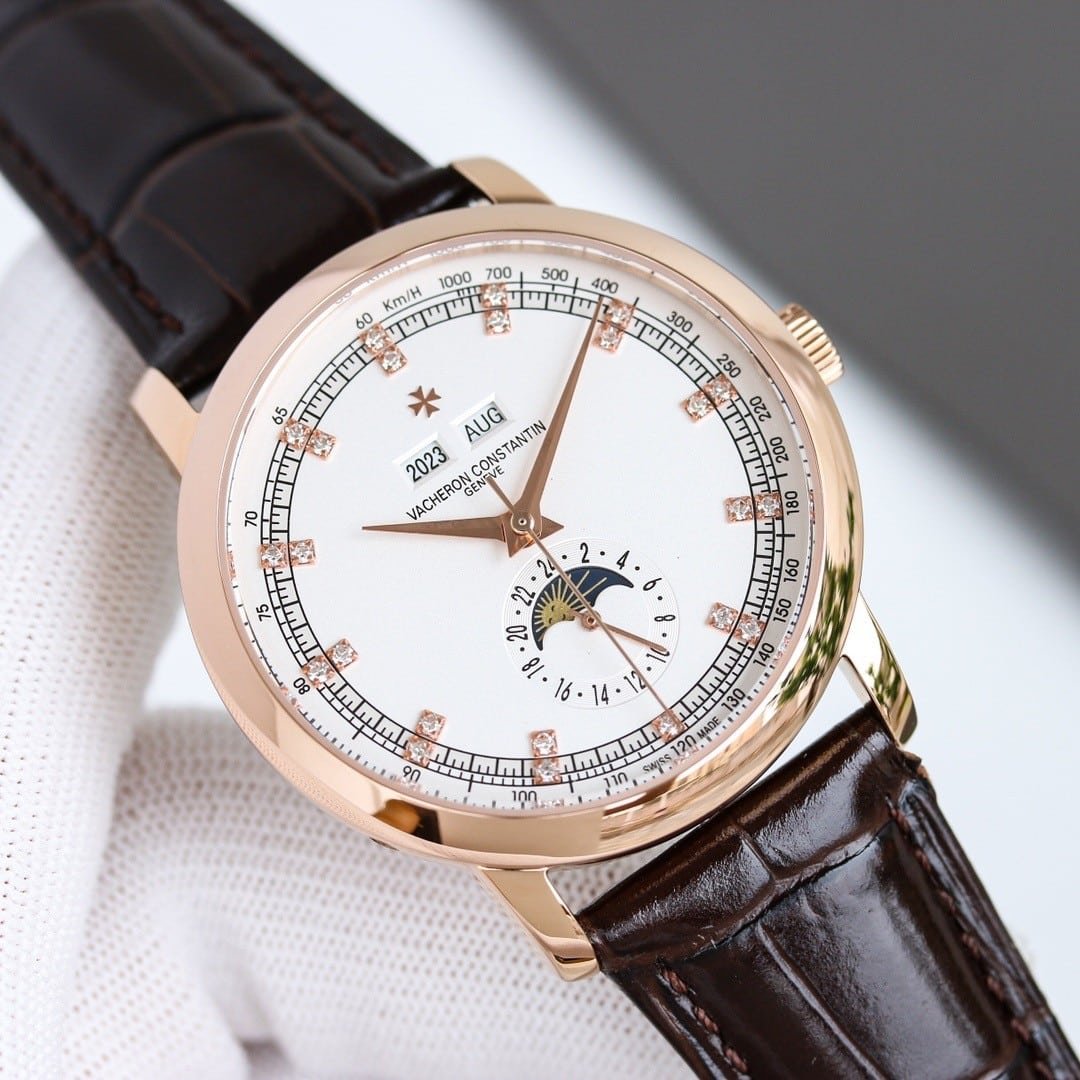
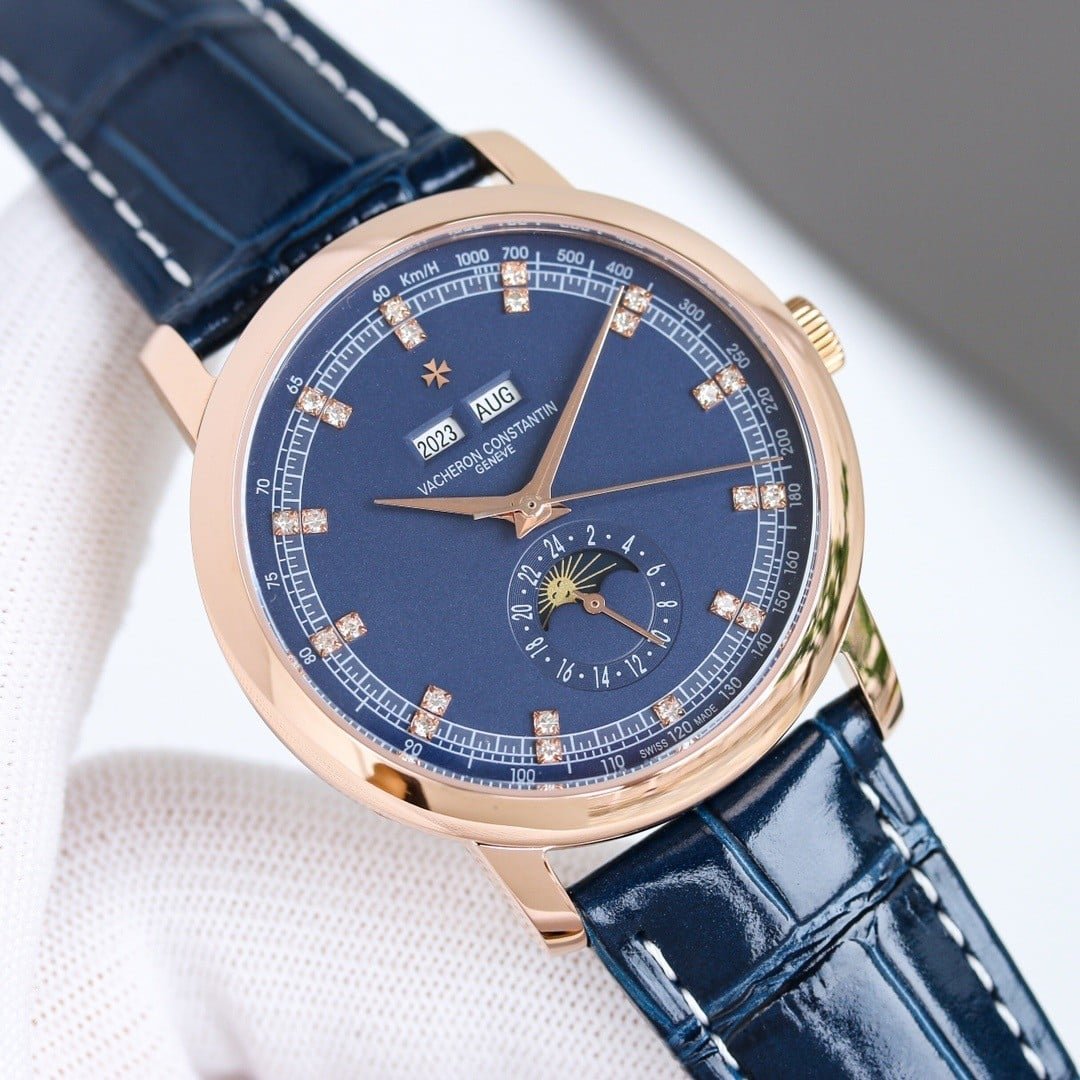
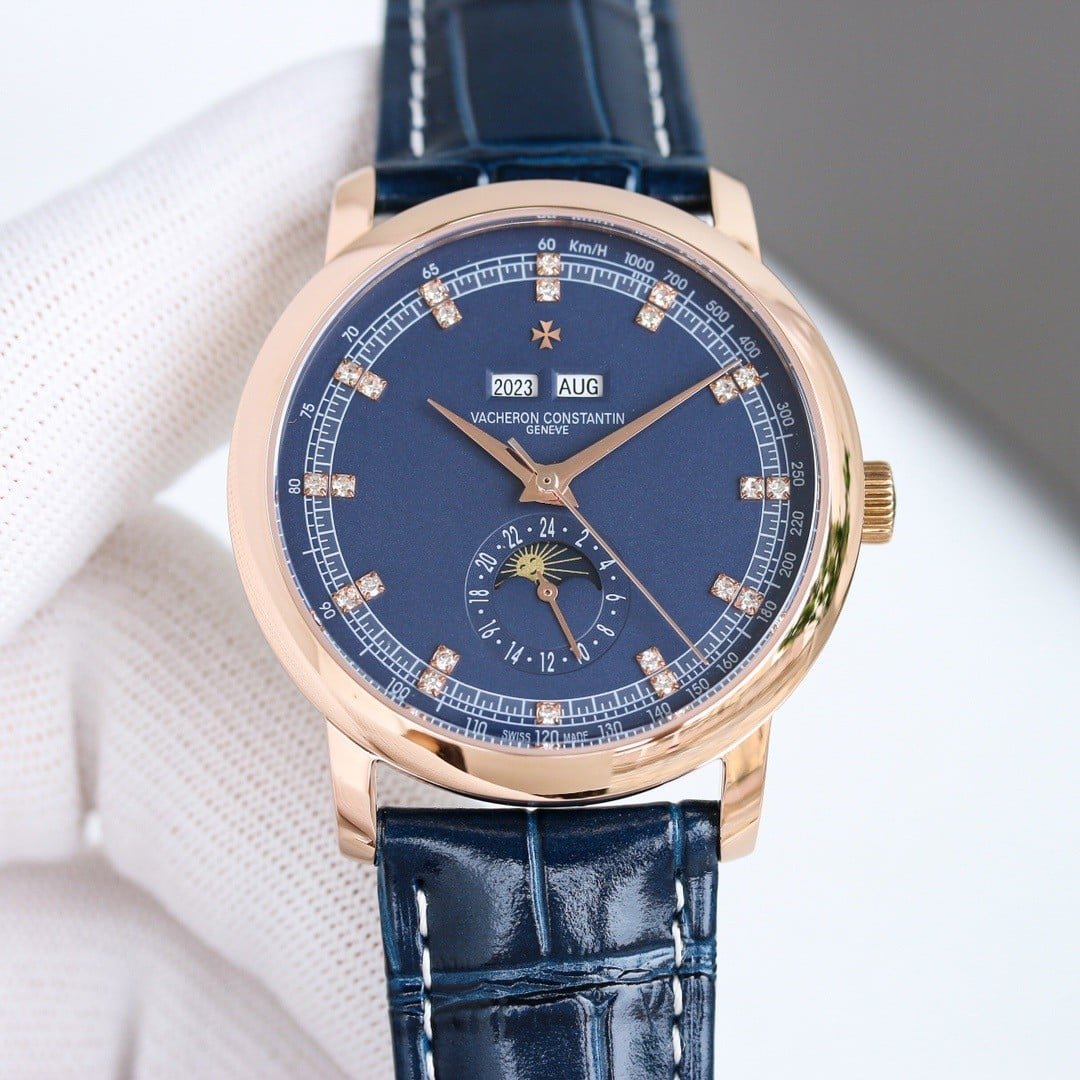
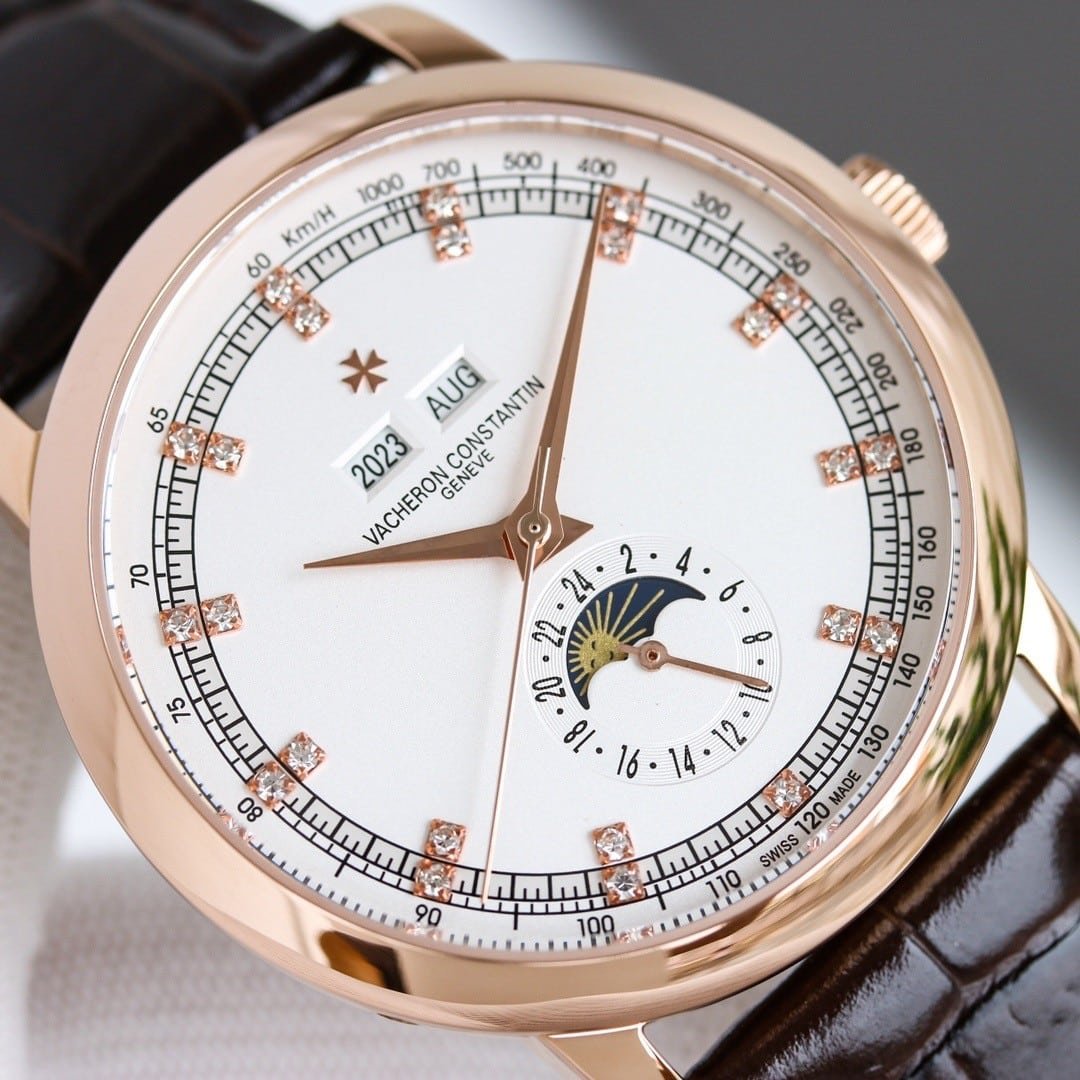
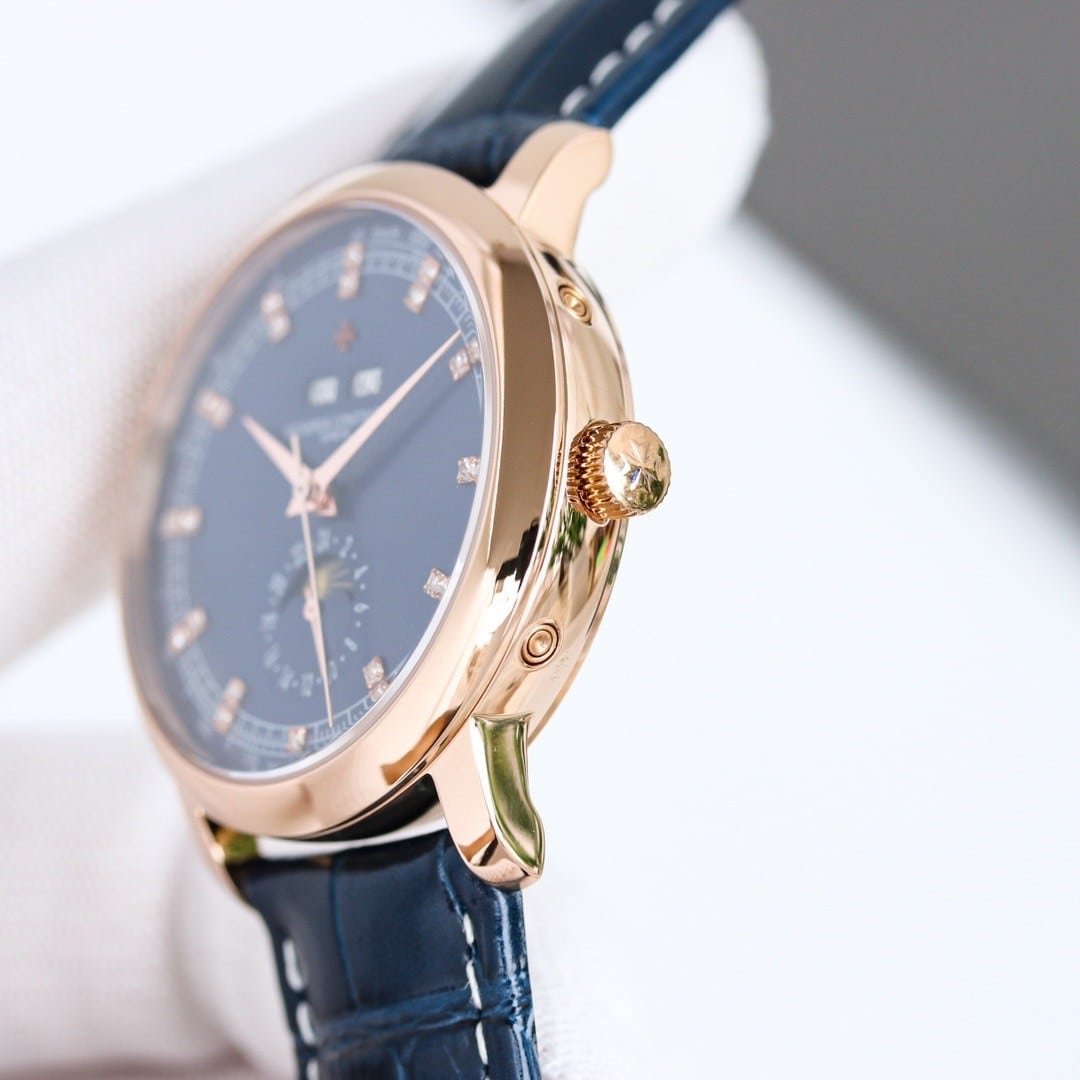
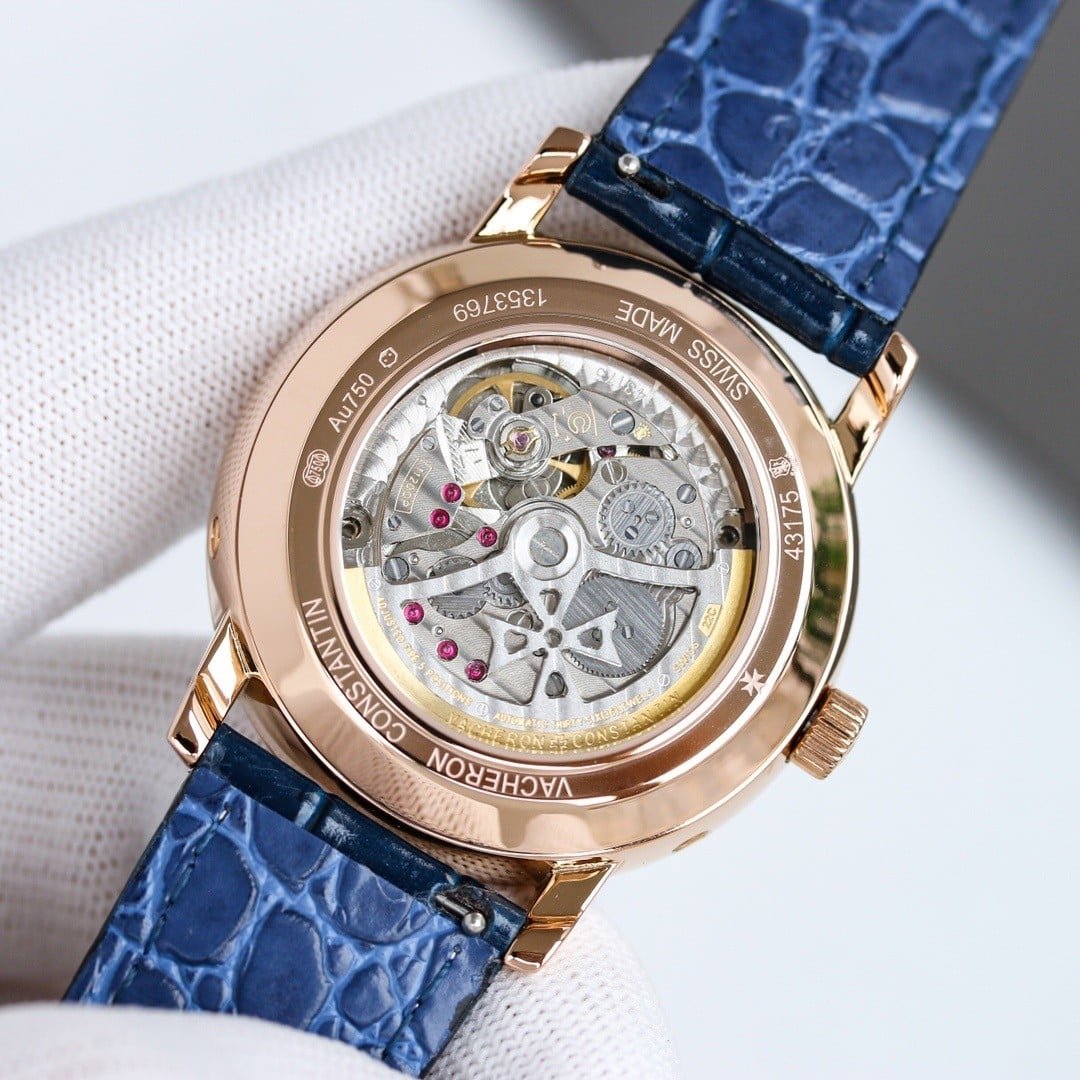
The first thing that becomes clear is that time never presents itself alone. The eye does not land on the hands immediately. It passes the outer scale, hesitates at the diamond-set hour markers, registers the month and year window, then settles on the time almost as an afterthought. While walking, that sequence stretches further. The watch does not cooperate with haste. Under a jacket cuff, the rounded case slides in smoothly, though the domed crystal occasionally meets fabric, creating a faint awareness of height that never fully disappears.
The design intent feels committed to coexistence instead of clarity. Nothing is minimized to speed interpretation. The dial layers information without hierarchy, allowing calendar data and time to occupy equal visual weight. That balance changes daily interaction. Some moments revolve around the date arrow, others around the moonphase quietly interrupting the lower dial. The restraint here is not minimalism, but refusal to simplify.
In morning daylight, the white dial appears warm and evenly lit. The rose gold hands and markers stand out clearly, while the diamond hour markers catch light briefly, then recede as the wrist angle changes. The outer scale remains legible but never dominant. Under office LED lighting, the dial cools slightly, and the diamond markers become more visually assertive than the hands themselves. At certain angles, the hands flatten against printed elements, especially near the top apertures. In evening ambient light, the moonphase becomes the visual anchor, its darker tones grounding the dial as the outer information fades into the background.
The case architecture negotiates presence rather than minimizing it. The bezel is smooth and polished, reflecting light softly without sharp flashes, while the mid-case maintains a consistent, rounded profile. Lug length is moderate, with a gentle downward curve that allows the strap to absorb most wrist movement. Compared with modern Vacheron Constantin lines, this case does not melt into the wrist. It maintains its shape, shifting subtly with motion rather than conforming completely. Subtle traces of guangzhou watchmaking appear in the finishing, where edges are smooth and transitions slightly softened to favor comfort over sharp definition.
Interaction with the movement is concentrated at the beginning. Setting the calendar functions requires patience and attention, encouraging stillness rather than efficiency. Once aligned, interaction drops away almost entirely. The crown offers measured resistance, neither stiff nor loose, and after the first setup, days pass without touching it again. The watch becomes something you observe, not something you manage.
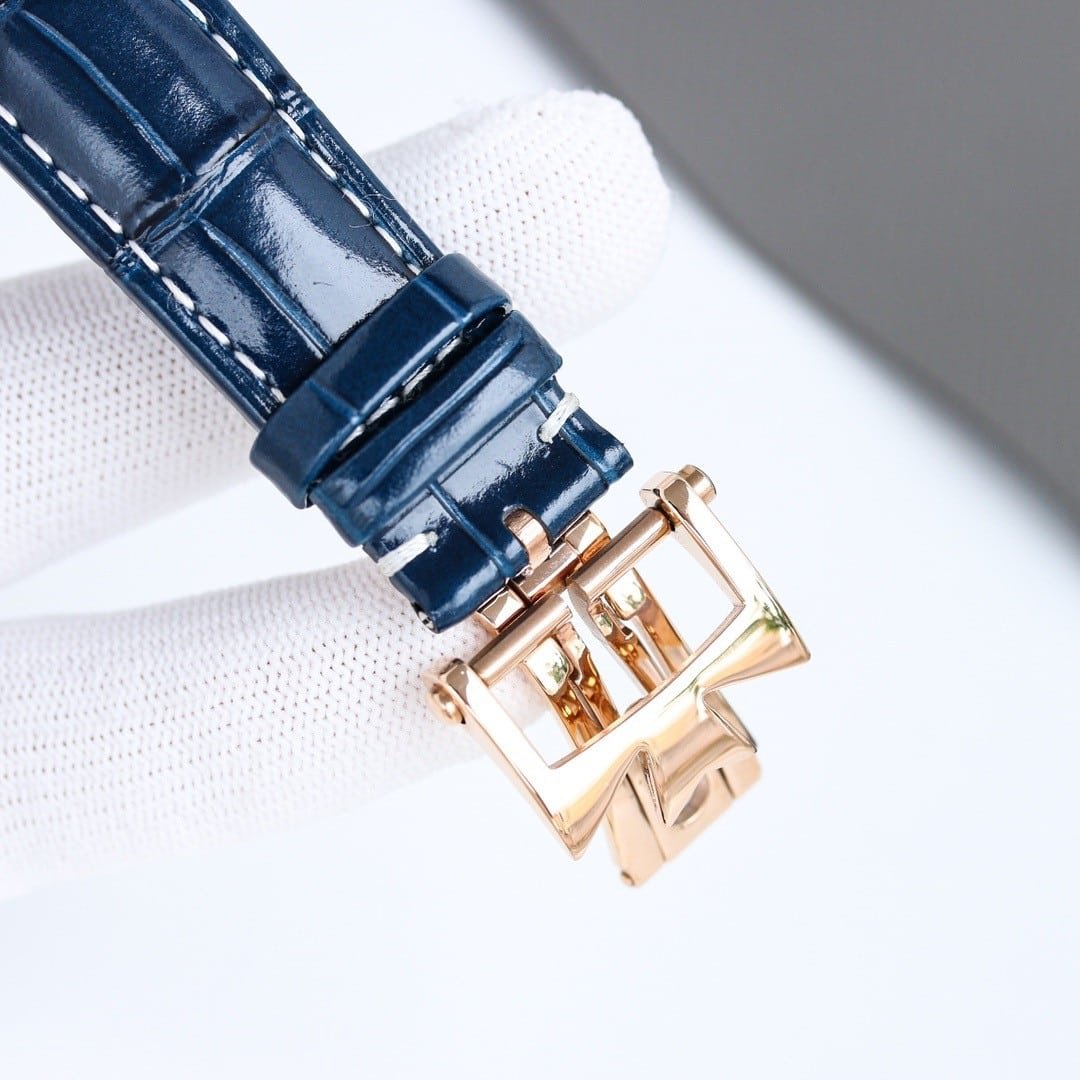
The leather strap plays a stabilizing role. Its width feels correct relative to the case, maintaining balance without exaggeration. Initially firm, it softens over several days, developing a natural drape that mirrors the case curvature. Seasonal comfort remains consistent. In warmer conditions, the leather stays pliable, and in cooler air it balances the warmth of the rose gold case. The strap never competes with the dial’s visual density.
From a factory execution perspective, TW factory Historiques 3110V/000R-B426 versions tend to emphasize dial alignment and functional accuracy. Calendar windows remain evenly spaced, and the moonphase disc sits cleanly within its aperture. Under cooler artificial light, the dial tone can appear slightly flatter, and the sparkle of the markers feels more controlled than expressive. Case edge definition is marginally softened on close inspection, supporting long wear rather than visual sharpness.
One ordinary moment occurred around 9:15 AM in a meeting room under overhead fluorescent lighting. Standing and holding documents, I glanced down and registered the month and year before realizing I had not yet read the time. Later, at 12:40 PM in a café with indirect daylight, the diamond markers caught light first, briefly distracting from the hands until I stopped moving. That pause felt natural rather than frustrating.
Another moment arrived around 7:50 PM at home, seated under warm lamps. The moonphase drew my attention before anything else, quietly shifting focus away from schedules and reminders. The watch seemed to prefer stillness, rewarding it with clarity that never appeared while moving.
This model suits someone comfortable with layered information and patient reading. It favors wearers who accept slower legibility and appreciate restraint expressed through coexistence rather than reduction. It does not simplify itself for convenience, and it does not apologize for that choice.
Compared neutrally to an original, this Historiques replica maintains similar proportion tension and dial balance. Dial warmth trends slightly cooler, case edge definition feels marginally softened, and crown resistance is lighter. The overall rhythm of daily interaction, however, remains closely aligned, requiring the same attention and patience.
As a china super clone Historiques, it mirrors the original’s refusal to prioritize speed, choosing instead to reward those willing to slow down. It remains present throughout the day, quietly insisting on being read rather than skimmed.
I see this model as a watch that rewards attention rather than speed, but that is only my view — the choice is yours.
| Category | Original Historiques | Factory Version |
|---|---|---|
| Model Code | 3110V/000R-B426 | TW factory Historiques 3110V/000R-B426 china super clone |
| Case Size | 40mm | 40mm |
| Dial Orientation | Symmetrical, multi-calendar | Same layout with slight visual shift |
| Case Profile | Rounded, domed crystal | Slightly softened transitions |
| Crown Feel | Firm, deliberate | Lighter resistance |
| Strap Proportion | Traditional leather | Similar width with firmer leather |
| Light Behavior | Warm, layered | Slightly cooler under LED |
| Daily Interaction | Slow, intentional | Comparable rhythm |