- IWC7070 products
- AQUATIMER99 products
- INGENIEUR1717 products
- PILOTS WATCHES22 products
- PORTOFINO1818 products
- PORTUGIESER2424 products
- OMEGA8787 products
- CONSTELLATION2121 products
- DE VILLE2020 products
- SEAMASTER2424 products
- SPEEDMASTER2222 products
- PATEK PHILIPPE6363 products
- ROLEX137137 products
- AIR KING44 products
- DATEJUST2424 products
- DAY DATE2424 products
- DAYTONA2424 products
- DEEPSEA44 products
- EXPLORER44 products
- GMT MASTER II1212 products
- OYSTER PERPETUAL1414 products
- SEA DWELLER22 products
- SKY DWELLER1414 products
- SUBMARINER55 products
- YACGT MASTER88 products



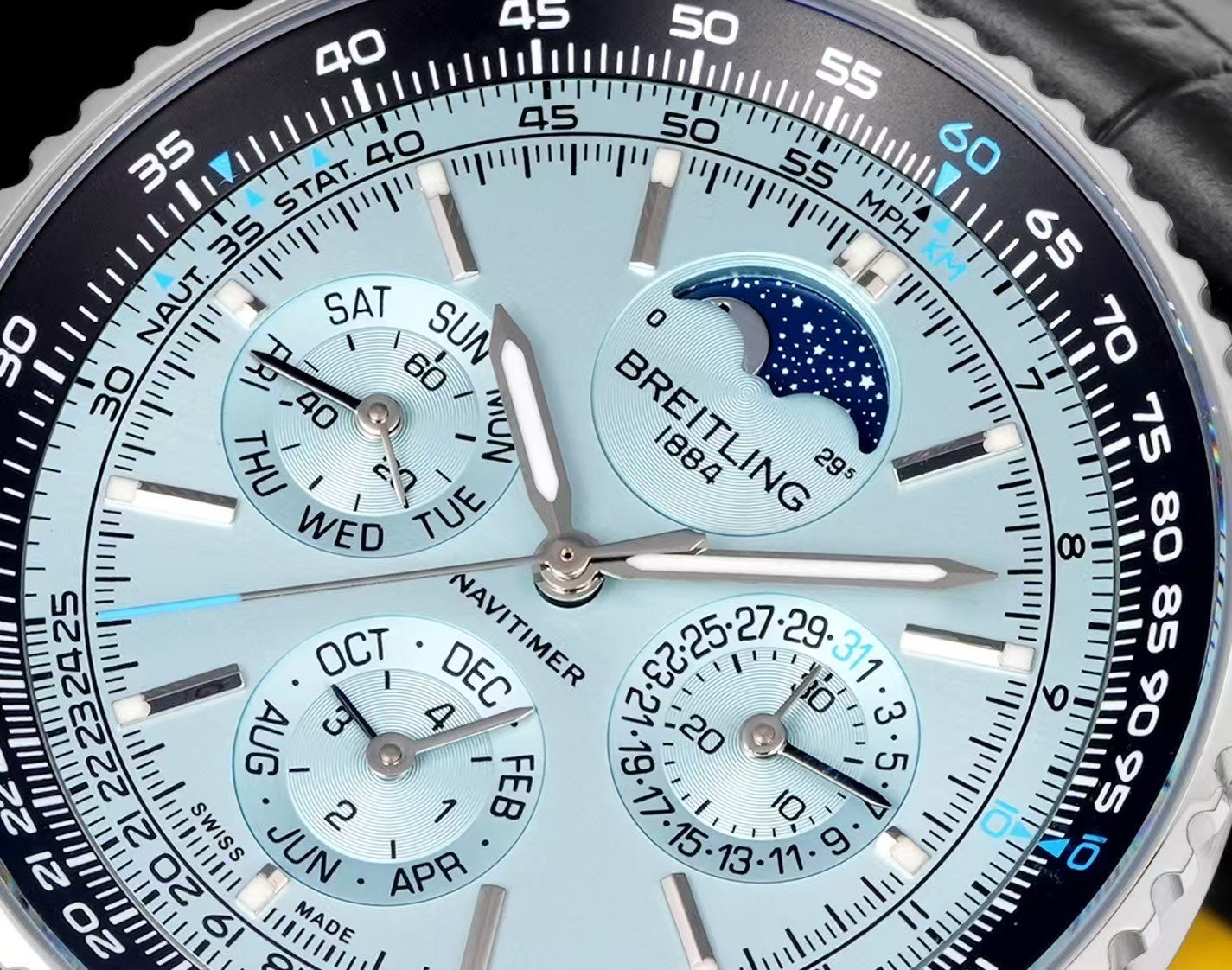

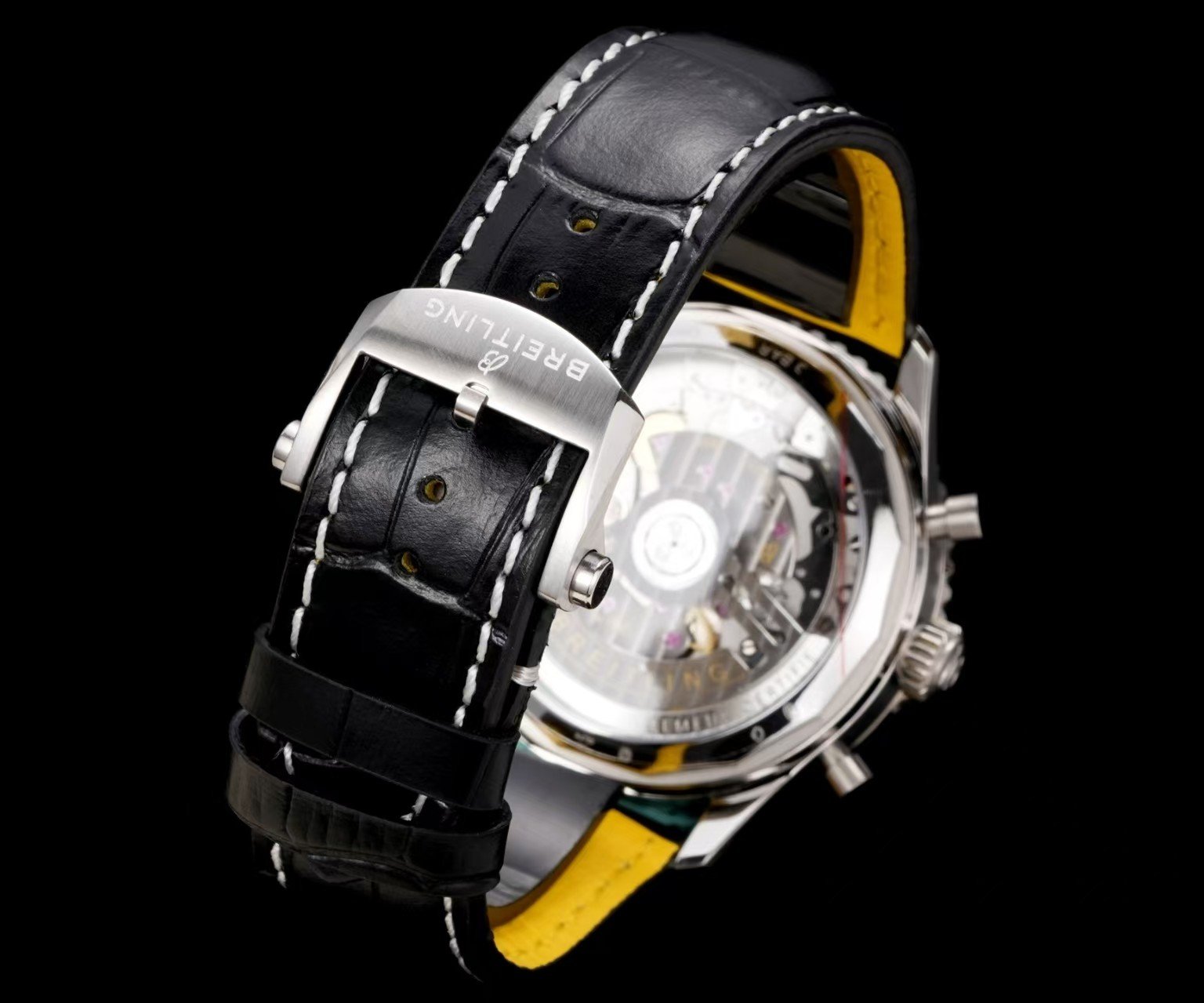

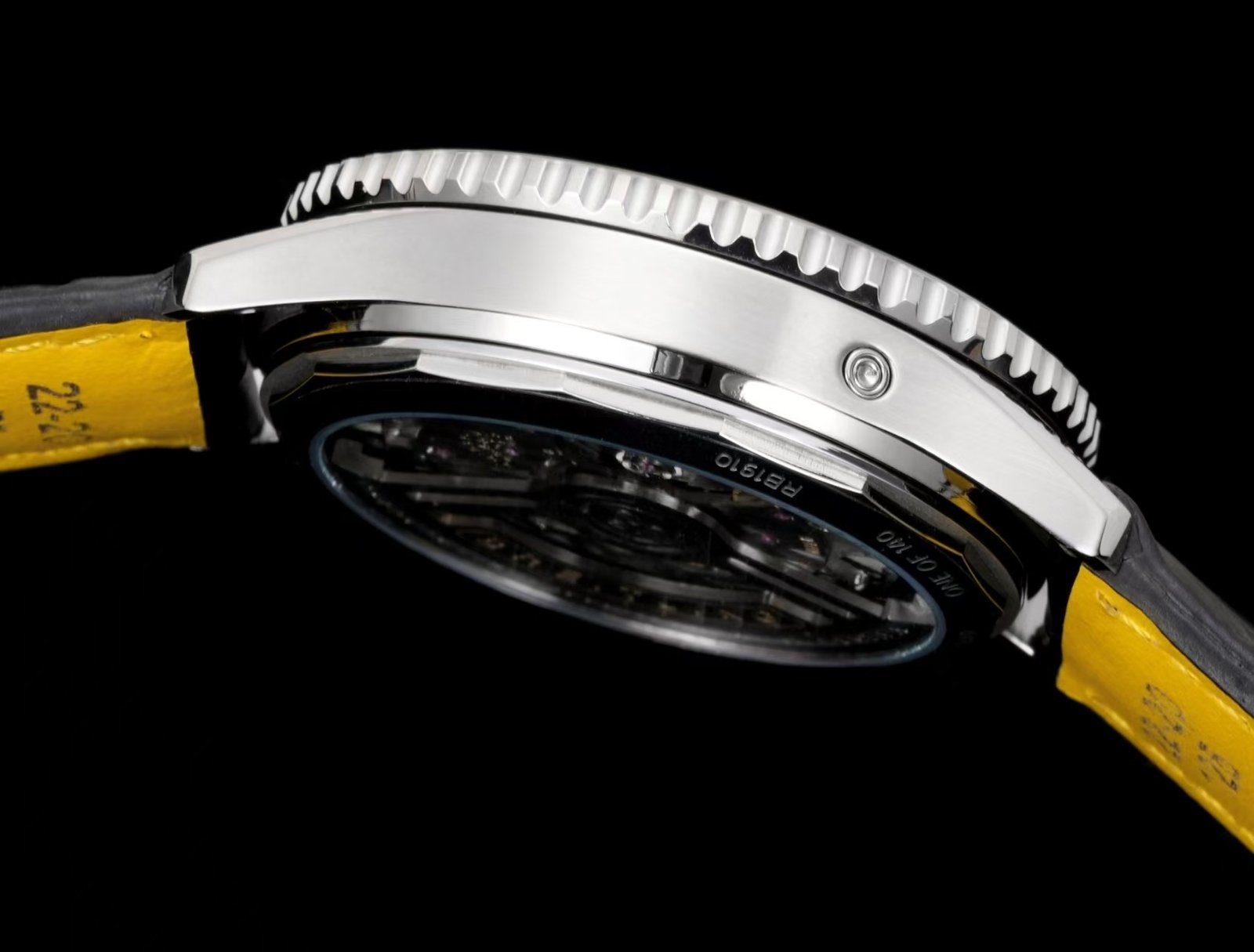
Breitling Navitimer Moonphase Calendar Super Clone – BLS Factory Silver Case Ice Blue Dial Edition
Functional Identity — This Is Not a Display Watch
This Navitimer is built around information density, not visual drama. Every major element on the dial exists to transmit usable data. It belongs to someone who interacts with their watch through adjustment, synchronization, and reference rather than simple time reading. If you rarely set your calendar, rarely correct dates, and never interact with sub-dials, this watch will quickly feel excessive. It is not passive. It requires participation.
Core Functional Layout — How the Dial Is Divided by Purpose
This ice-blue BLS factory super clone Navitimer follows a four-zone functional logic:
-
Top (12 o’clock): Moonphase
-
Left (9 o’clock): Weekday
-
Right (3 o’clock): 24-hour time
-
Bottom (6 o’clock): Month
None of these functions overlap mechanically. Each is driven by an independent calendar wheel layer, which prevents cross-drag during quick adjustment. This separation is important: it keeps resistance consistent when correcting individual displays.
The slide-rule bezel remains fully functional and independent of the calendar system. Its rotation does not affect any internal calendar gearing.
Moonphase Behavior — Long-Cycle Motion, Not Decoration
The moonphase disc advances incrementally once every 24 hours, not continuously. This means:
-
You will see micro-shifts in the moon position daily.
-
It does not “glide.” It steps.
-
After full adjustment, it remains visually stable for weeks at a time.
Under indoor light, the moon aperture reads clearly without glare. At night, the contrast increases, and the star field becomes more legible than in daylight. This is a functional moon indicator, not a decorative animation.
Adjustment logic:
-
The moon phase is coupled to the calendar correction setting.
-
It must be synchronized after setting date and month.
-
If you adjust the date backward repetitively, the moon disc will desync. This behavior matches mechanical calendar logic.
Day, Date, Month — Calendar Gear Behavior in Real Use
Weekday (9 o’clock)
-
Advances once every 24 hours.
-
Transition window occurs around midnight, not sharply at twelve.
-
There is a two-hour blending zone where partial advancement can be observed.
Month (6 o’clock)
-
Advances only when the date passes from 31 → 1.
-
It does not auto-handle short months.
-
Manual correction is required at the end of:
-
February
-
April, June, September, November
-
This confirms it is a full calendar, not a true perpetual calendar. The behavior matches modular calendar architecture.
24-Hour Subdial — Functional Time Zone Reference
The 3 o’clock subdial does not mirror the main hands. It tracks:
-
Absolute 24-hour cycle
-
Independent of AM/PM ambiguity
-
Useful for:
-
Night shifts
-
Remote coordination
-
Regulated routines
-
You can tell immediately if the main time display is currently in a night or day phase without relying on light conditions.
Crown & Pusher Logic — How You Actually Operate It
This BLS factory super clone uses a multi-stage crown + calendar pusher system.
Crown Positions:
-
Position 0: Manual winding
-
Position 1: Calendar correction (with pushers)
-
Position 2: Time setting
Calendar Pushers:
-
Each recessed pusher controls an independent calendar layer.
-
Resistance is firm and short-stroke.
-
No spring softness.
-
No double-trigger behavior.
During full synchronization (all calendar elements aligned), the operation time is long, not quick. This is normal and confirms layered gearing.
Slide-Rule Bezel — Still Fully Independent
The slide-rule system:
-
Rotates freely in both directions
-
Does not introduce resistance into the calendar system
-
Does not show internal drag caused by auxiliary calendar gears
This confirms the calendar and bezel systems are mechanically isolated, which is a key reliability detail for daily usability.
Caseback View — What the Movement Actually Shows You
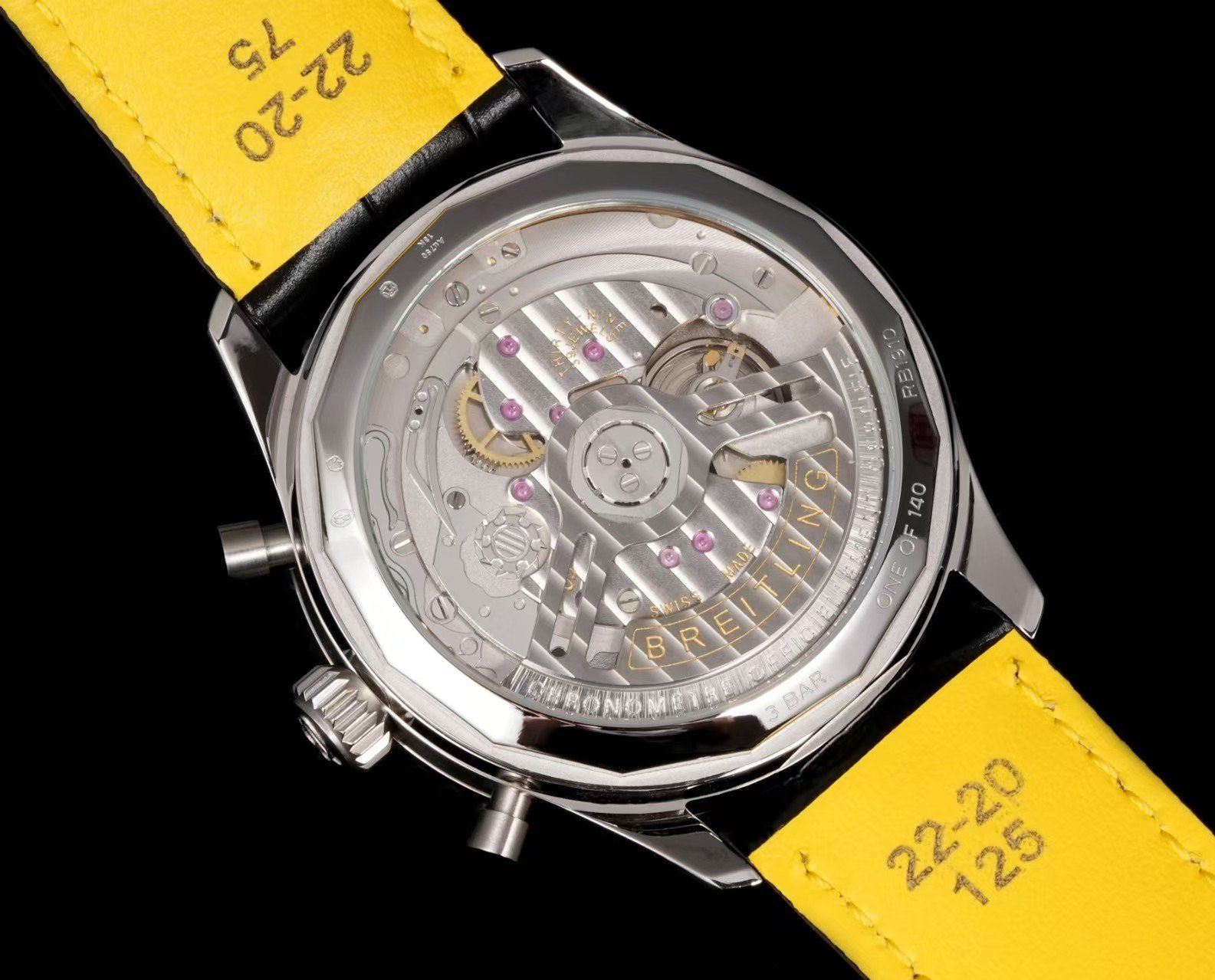
From the exhibition caseback, what you visually confirm is:
-
A decorated automatic base architecture
-
Calendar module stacked above the base plate
-
Rotor driving only the base winding system, not the calendar layers
-
Multiple jewel anchor points in the calendar overlay
This confirms the functional hierarchy:
Power → Base auto movement → Calendar module → Display
Not the reverse.
Functional Rhythm — How This Watch Behaves Over Weeks
This is not a “check once and forget” watch.
-
You will interact with it:
-
At least once per month
-
Sometimes twice
-
-
You will notice:
-
Minor phase offsets if you travel
-
Weekday lag if power reserve drops below threshold
-
-
You will feel:
-
Increased manual interaction compared to three-hand or chronograph models
-
This is the real cost of functional density.
Factory Interpretation — What BLS Prioritized Here
BLS factory clearly prioritized:
-
Calendar legibility
-
Adjustment isolation
-
Mechanical layer independence
They did not prioritize:
-
Ultra-thin case
-
Perpetual auto-correction
-
Fully silent calendar switching
This is a tool-first interpretation, not a luxury illusion.
Who This Watch Is For / Not For (Function-Based)
For:
-
Users who regularly:
-
Track month structure
-
Reference weekday cycles
-
Manage irregular schedules
-
-
People who enjoy:
-
Setting mechanical calendars
-
Understanding when corrections are required
-
Not For:
-
Users who dislike:
-
Manual corrections
-
Adjustment procedures
-
Mechanical “imperfection” in date handling
-
This watch demands functional responsibility from its owner.
My Personal Take — Only Functional Observation
After full synchronization, the calendar ran stably for multiple weeks without drift. The moonphase showed visible incremental changes rather than visual animation. The month required correction at the expected short-month boundary. The 24-hour subdial remained perfectly independent of the main hands. The system behaved as a mechanical calendar should, not as a simulated digital logic.
Factory vs Original — Functional Nature Only
| Functional Area | Super Clone Nature | Original Nature |
|---|---|---|
| Calendar structure | Modular full-calendar | Integrated perpetual calendar |
| Month handling | Manual short-month correction | Automatic perpetual logic |
| Moonphase drive | 24-hour stepped advancement | Astronomical cycle gearing |
| Adjustment system | Multi-pusher mechanical isolation | Crown-integrated correction |
| Functional reliability | Requires owner management | Self-regulating |
Closing Thought — Decision Ownership
My attitude toward this version is defined entirely by how often it asks the wearer to participate in its operation.
We can show how it is built and how it behaves. But how it fits into your life is a decision only you can make.