- IWC7070 products
- AQUATIMER99 products
- INGENIEUR1717 products
- PILOTS WATCHES22 products
- PORTOFINO1818 products
- PORTUGIESER2424 products
- OMEGA8787 products
- CONSTELLATION2121 products
- DE VILLE2020 products
- SEAMASTER2424 products
- SPEEDMASTER2222 products
- PATEK PHILIPPE6363 products
- ROLEX137137 products
- AIR KING44 products
- DATEJUST2424 products
- DAY DATE2424 products
- DAYTONA2424 products
- DEEPSEA44 products
- EXPLORER44 products
- GMT MASTER II1212 products
- OYSTER PERPETUAL1414 products
- SEA DWELLER22 products
- SKY DWELLER1414 products
- SUBMARINER55 products
- YACGT MASTER88 products
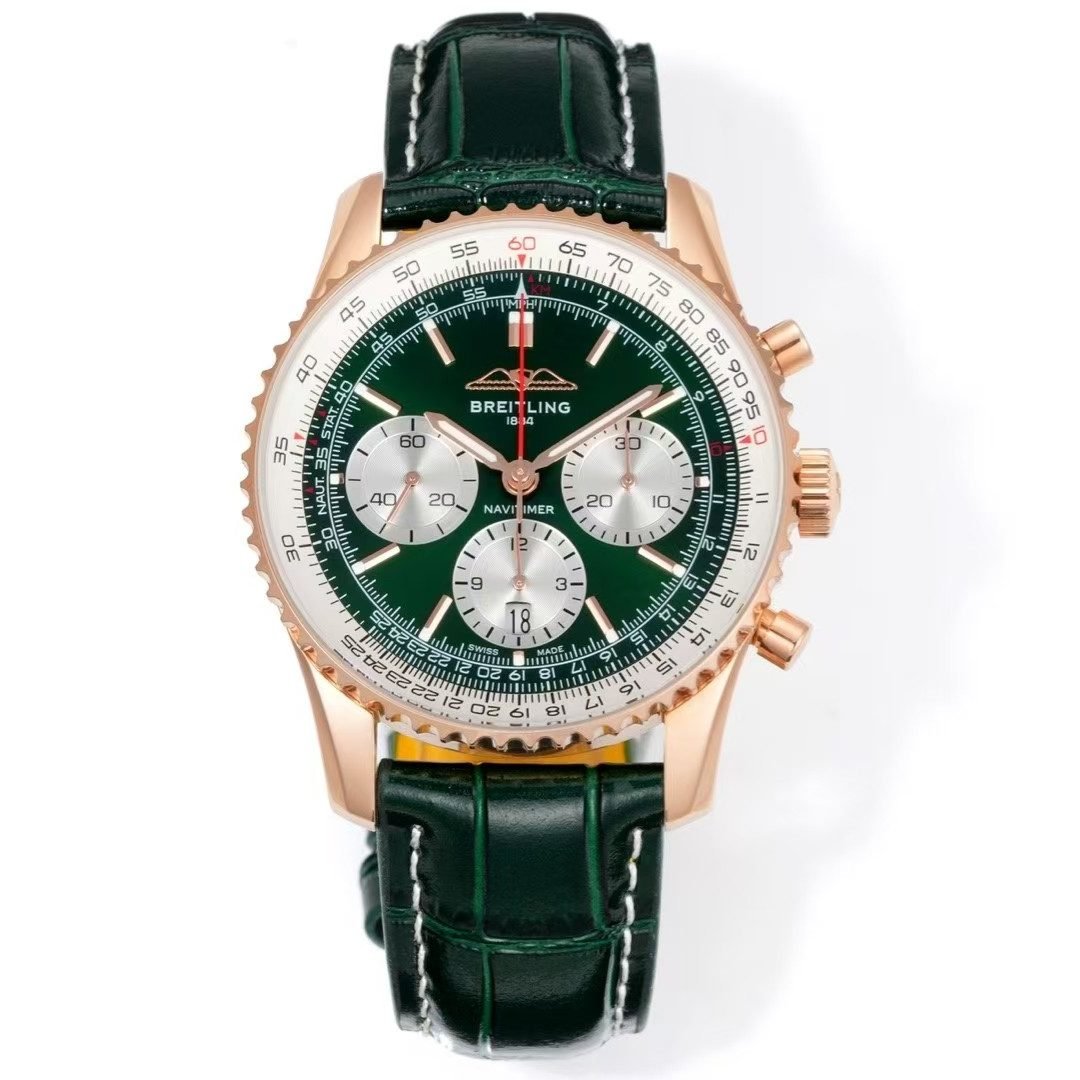
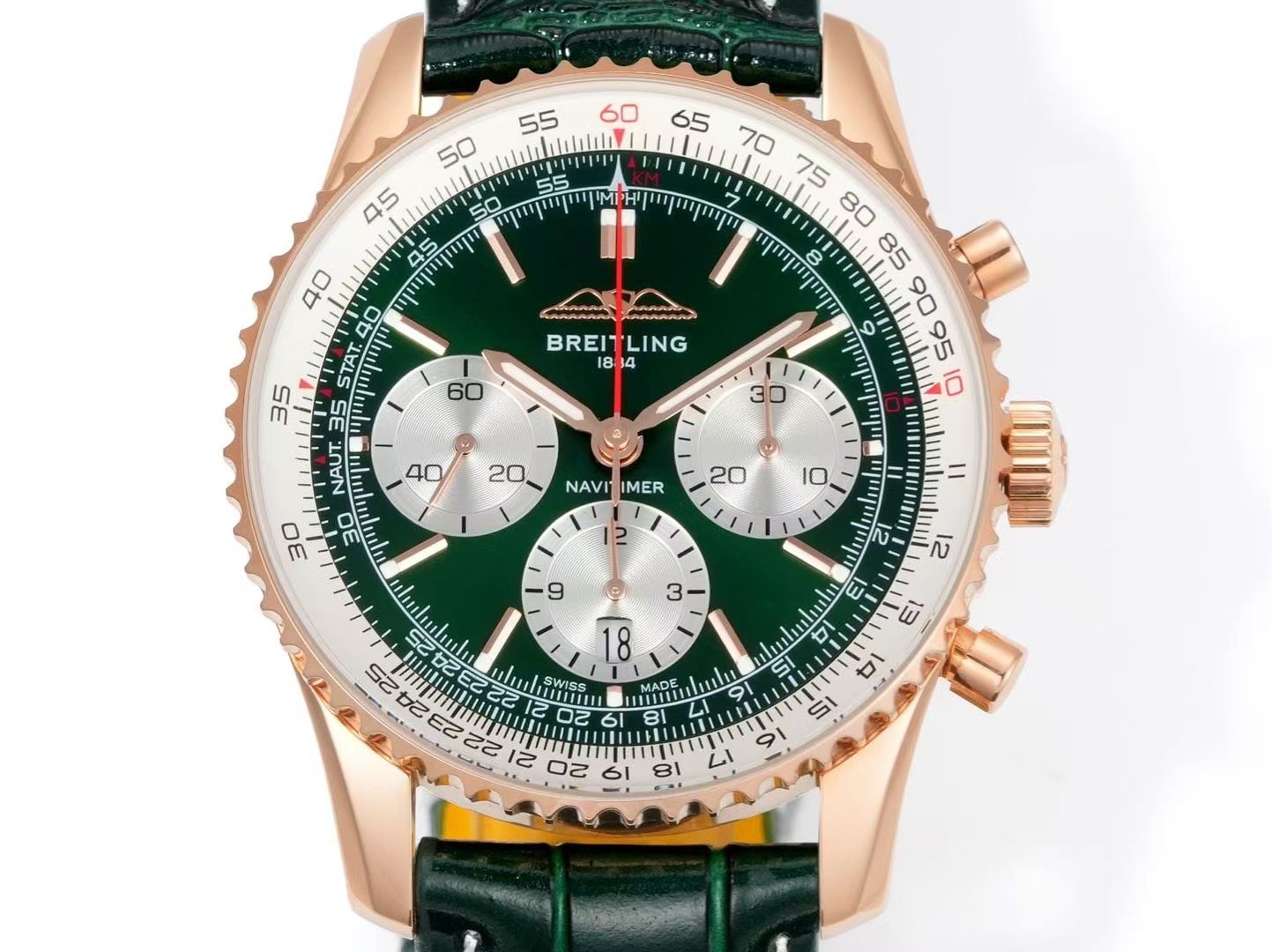
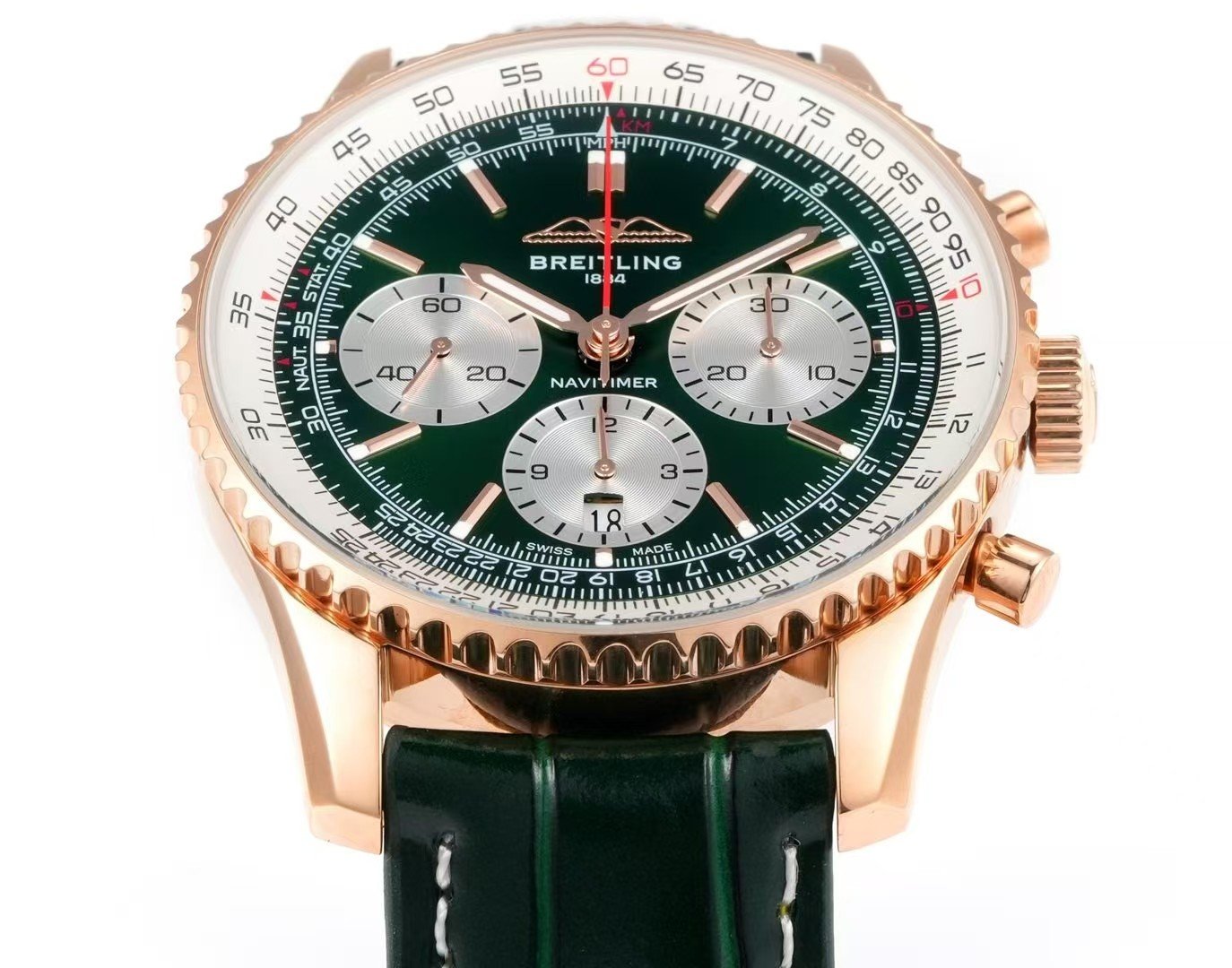
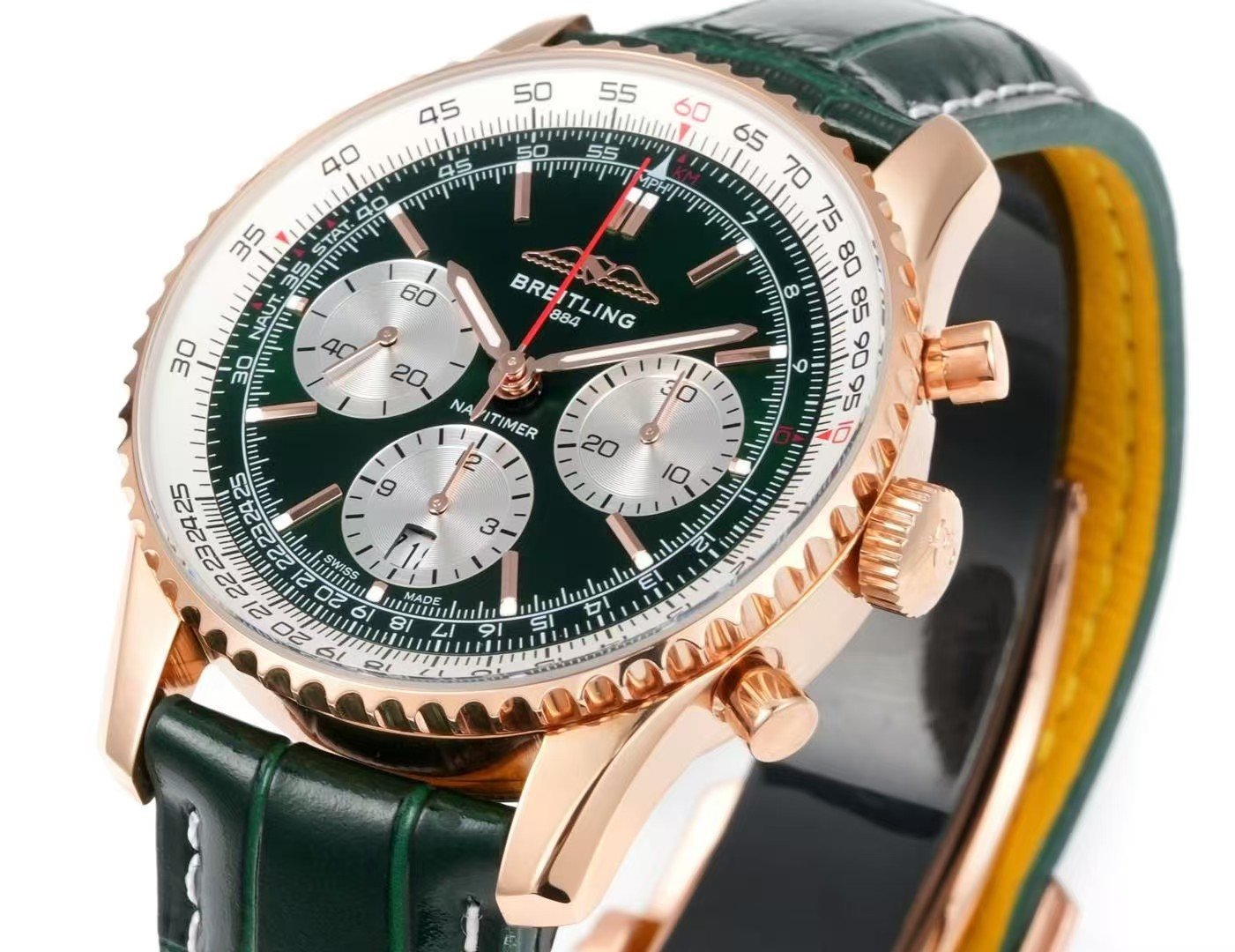
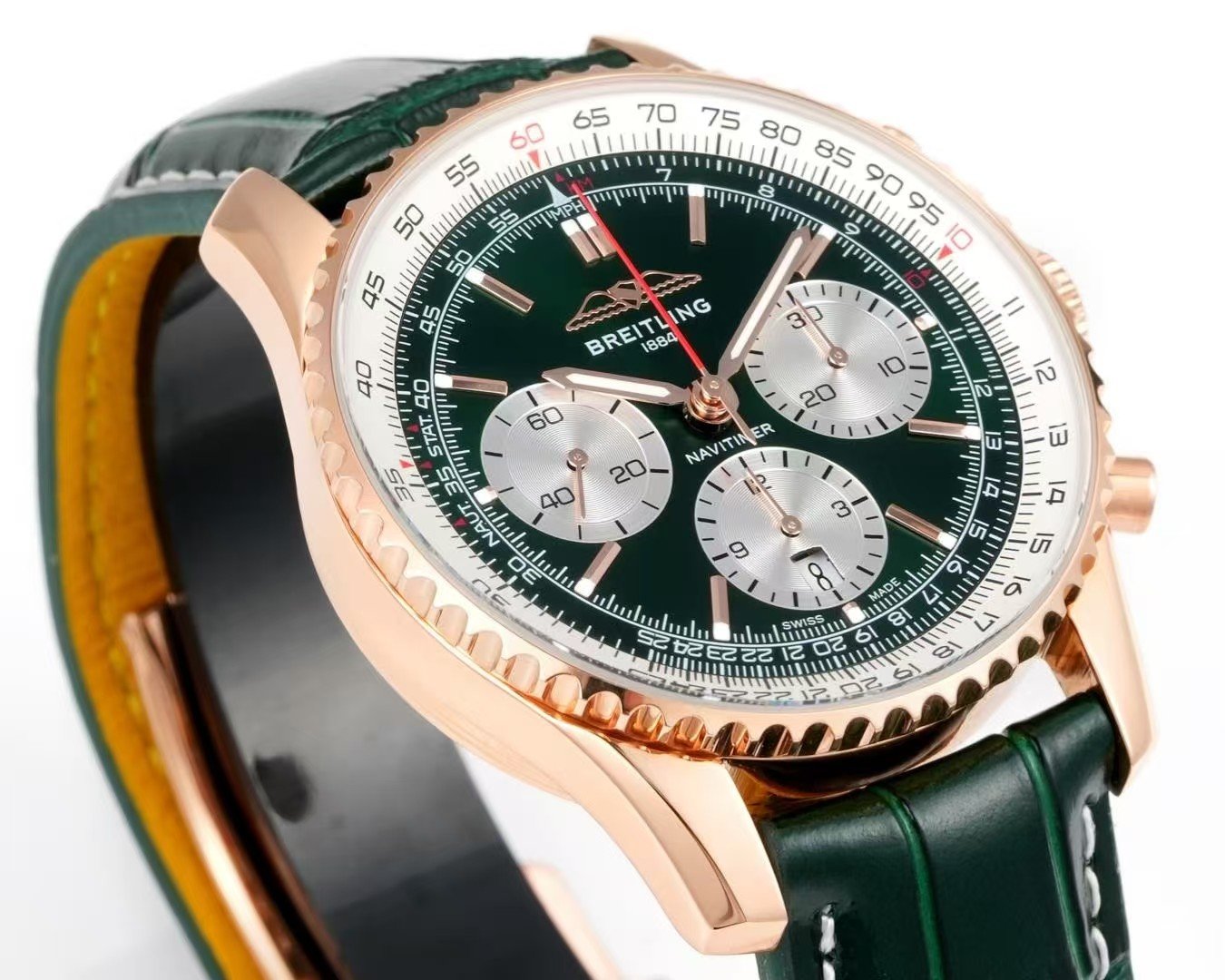
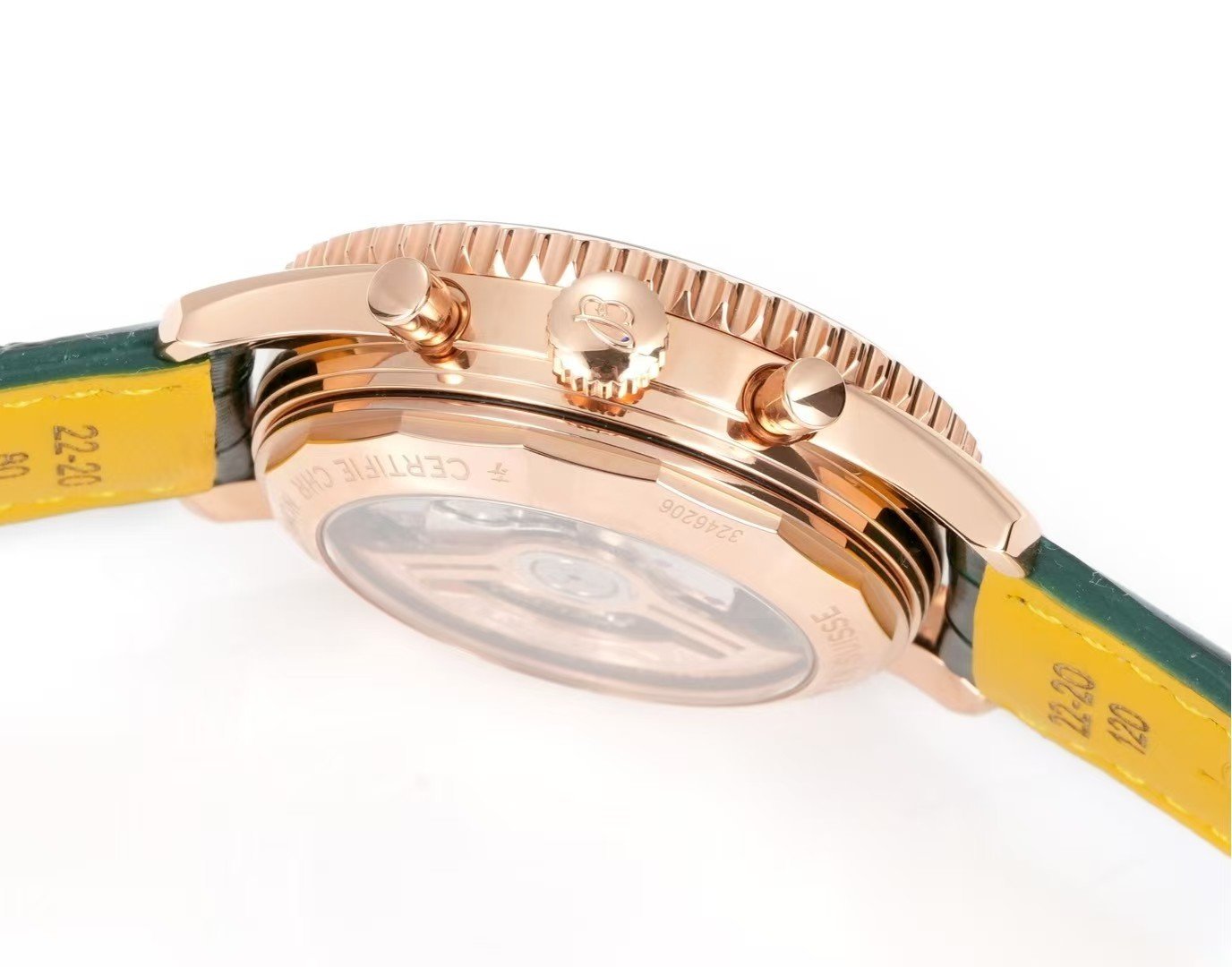
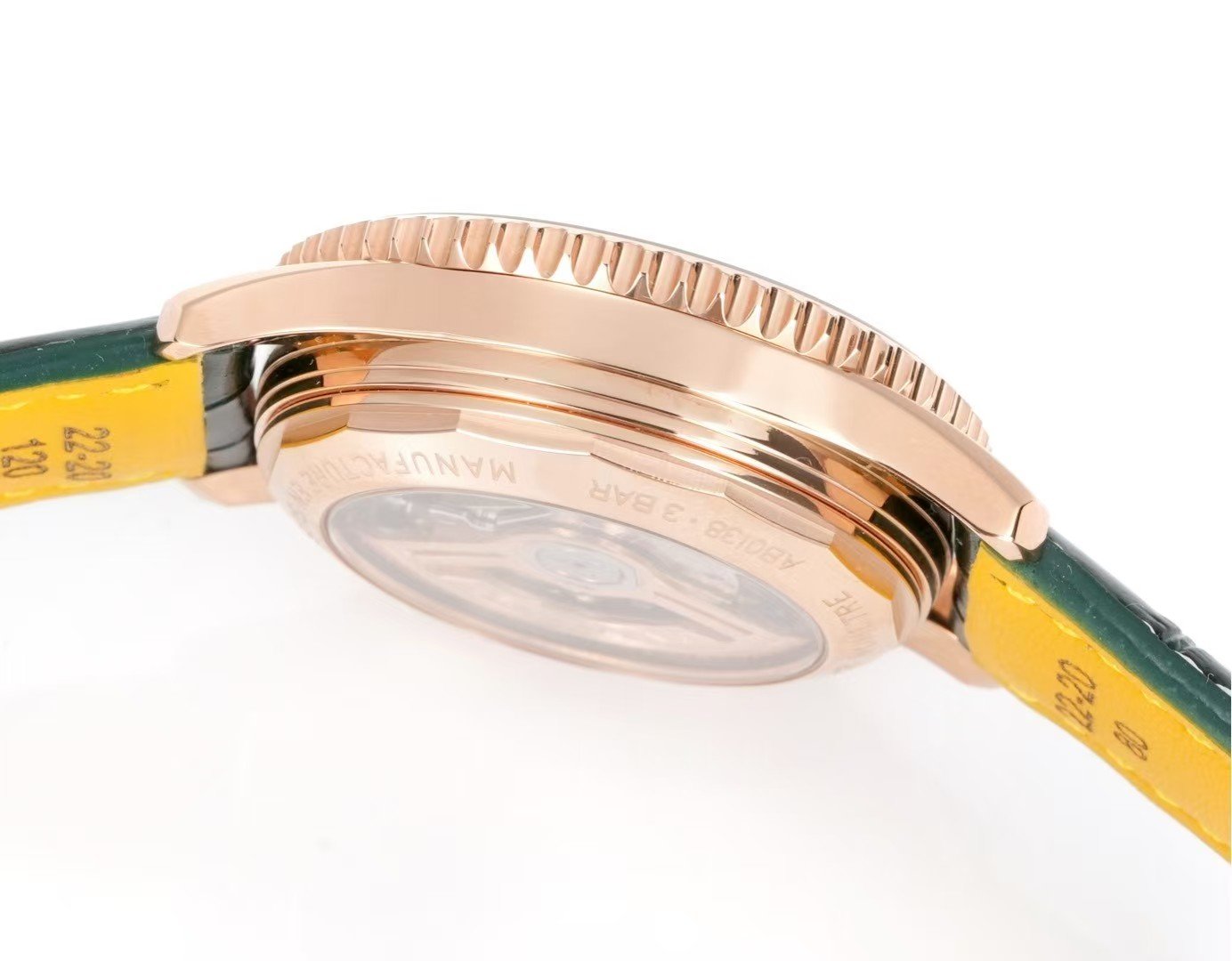
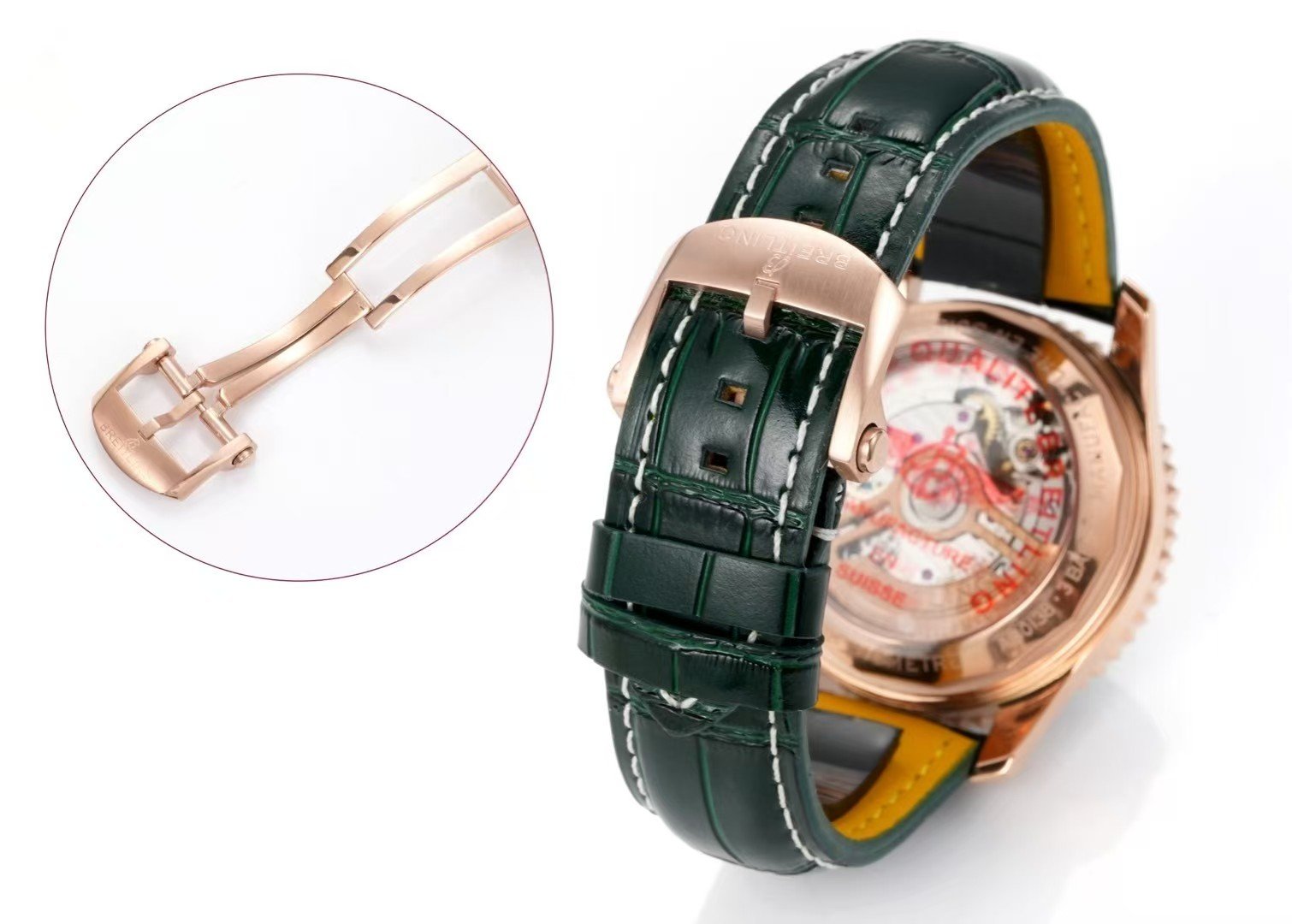
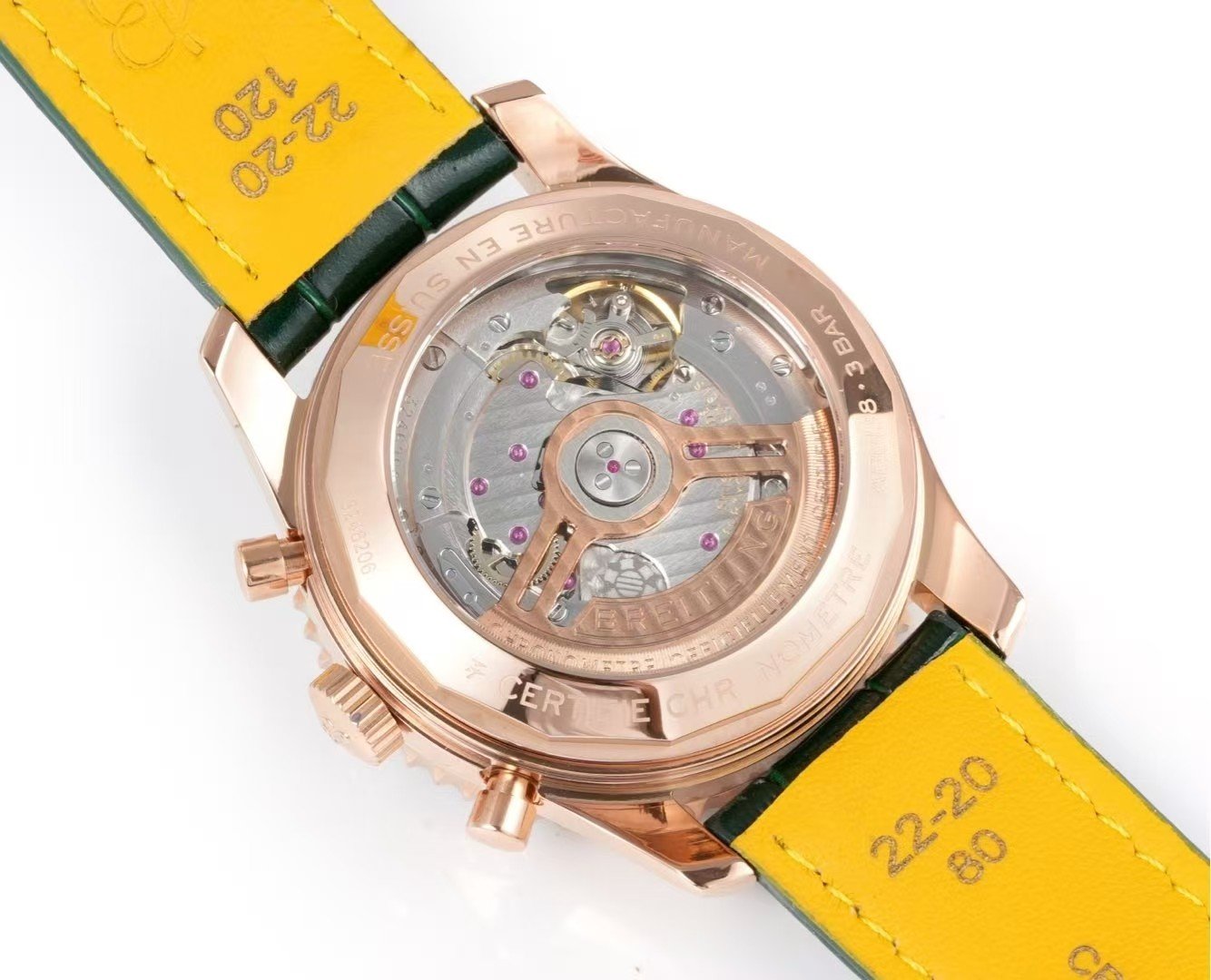
Breitling Navitimer Chronograph Super Clone – BLS Factory Rose Gold Case Green Dial Edition
Functional Identity — This Is a Timing Instrument Before It Is a Watch
This Navitimer exists for measured intervals, not passive time passing. Every major structure on the dial is built around start–stop–reset logic. It is meant to be interacted with repeatedly in short cycles. If your use of a watch rarely goes beyond reading the hour, this version will feel unnecessary. It demands input.
Chronograph Layout Logic — How Information Is Distributed
This BLS factory super clone chronograph follows a classic tri-compax functional structure:
-
Central long hand: Chronograph seconds
-
Left sub-dial (9 o’clock): 60-minute counter
-
Right sub-dial (3 o’clock): Small seconds (continuous time base)
-
Bottom sub-dial (6 o’clock): 12-hour chronograph counter
-
Date window: Independent calendar aperture
Each counter is mechanically isolated. Starting or stopping the chronograph does not disturb the base timekeeping. This separation is essential for stability in repeated timing use.
Start / Stop / Reset — Real Button Behavior
This is where the functional personality becomes obvious.
Upper Pusher (Start / Stop)
-
Requires deliberate pressure
-
First resistance → mechanical engagement → clean release
-
The chronograph seconds hand begins with zero hesitation
-
No false start, no bounce
Lower Pusher (Reset)
-
Firmer resistance than start
-
Reset snap is fast and forceful
-
All three chronograph hands return without stagger
-
No delayed realignment
This means:
You can trust that every full timing cycle is mechanically complete.
There is no soft-trigger behavior here. This is a tool-style pusher feedback, not decorative.
Timing Precision — How the Counters Actually Advance
-
The chronograph seconds advances with crisp mechanical stepping.
-
The minute counter advances exactly once per 60-second revolution.
-
The 12-hour counter advances progressively, not in sudden jumps.
This confirms that the timing system is not simulated. It is driven by true layered mechanical transfer, not direct digital emulation.
Crown Behavior — Base Time Control Only
The crown does not interact with the chronograph system.
-
Position 0: Manual winding
-
Position 1: Date correction
-
Position 2: Time setting
Chronograph control remains fully separated at the pushers. This prevents accidental desynchronization during time adjustment.
Slide-Rule Bezel — Still Fully Usable With Chronograph Running
The slide-rule bezel remains:
-
Bi-directional
-
Independent from timing gears
-
Free of added drag during chronograph operation
You can actively:
-
Run the chronograph
-
Rotate the bezel
-
Adjust minor references
…without introducing cross-resistance. This confirms mechanical isolation between bezel and timing layer.
Functional Rhythm — How This Watch Behaves Over Daily Use
This is not a “set once, wear forever” Navitimer.
-
You will use the pushers.
-
You will reset it multiple times per day.
-
You will notice the pusher resistance becoming familiar.
-
You will feel the internal clutch engage under your finger.
Over time, the chronograph becomes a repetitive interaction tool, not a visual feature.
Factory Interpretation — What BLS Prioritized
BLS factory clearly focused on:
-
Pusher feedback
-
Chronograph stacking stability
-
Independent timing behavior
They did not prioritize:
-
Ultra-thin profile
-
Silent rotor behavior
-
Decorative chronograph theatrics
This is a function-first chronograph, not a display chronograph.
Who This Version Is For / Not For (Purely Function-Based)
For:
-
Users who:
-
Actively time short events
-
Reset frequently
-
Rely on manual control
-
-
People who:
-
Want tangible mechanical feedback
-
Enjoy start–stop precision
-
Not For:
-
Users who:
-
Never touch chronograph pushers
-
Prefer watches that disappear on the wrist
-
Dislike mechanical resistance during interaction
-
This watch rewards decisive input, not casual tapping.
My Personal Functional Observation
The chronograph engaged cleanly every time without false starts. Reset action remained sharp after repeated cycles. The minute and hour counters maintained alignment across extended use. The pushers did not soften with repetition. The feel remained consistent. This confirmed that the timing layer was not surface-level decoration, but a working mechanical module.
Factory vs Original — Function Nature Only
| Functional Area | Super Clone Nature | Original Nature |
|---|---|---|
| Chronograph drive | Modular automatic chronograph | In-house chronograph architecture |
| Pusher feedback | Firm mechanical resistance | More refined detent control |
| Counter progression | Progressive layered advancement | Integrated gear train |
| Reset behavior | Direct snap-back | Smoother elastic return |
| Long-term interaction | Requires regular user input | Optimized for endurance use |
Closing Thought — Functional Ownership
My attitude toward this version is shaped by how directly it responds to start, stop, and reset. It communicates through force, not appearance.
We can show how it is built and how it behaves. But how it fits into your life is a decision only you can make.