
Our Expertise
Our expertise is built on years of hands-on examination, comparison, and mechanical understanding — not marketing claims.
Understanding Before Judging
Most replica watches are judged visually first. This approach favors immediate impact: sharper polishing, brighter lume, more aggressive contrast. These traits are easy to market, easy to photograph, and easy to misunderstand.
Our perspective formed differently. Before comparing factories or versions, we start by understanding the original watch at a mechanical and structural level. A Submariner is not defined by how glossy its ceramic insert looks. A Daytona is not convincing simply because the sub-dials are crisp. These watches are systems. Their appearance follows their construction, not the other way around.
Without understanding that system, comparison becomes superficial. We see this most clearly when visually impressive versions fail to hold up after extended wear, while quieter builds with better underlying logic remain stable. Judgment must follow understanding, or it drifts toward the wrong details.
Three Dimensions of Expertise
Visual Accuracy
Visual accuracy begins with proportion, not finish.
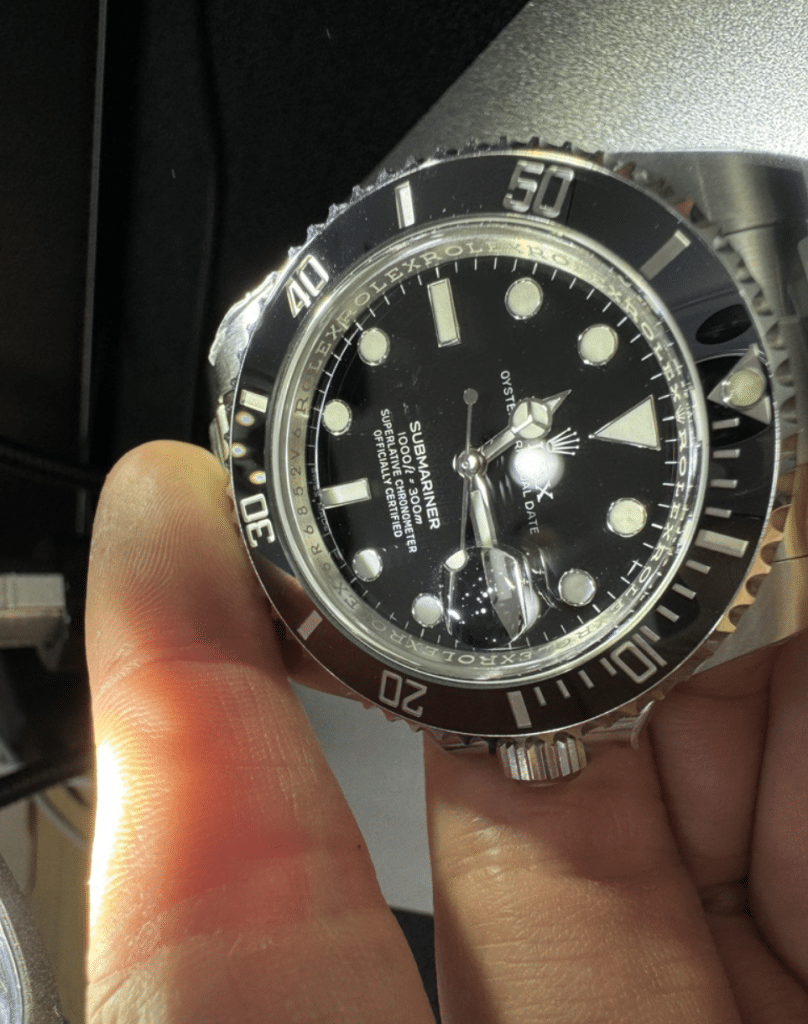
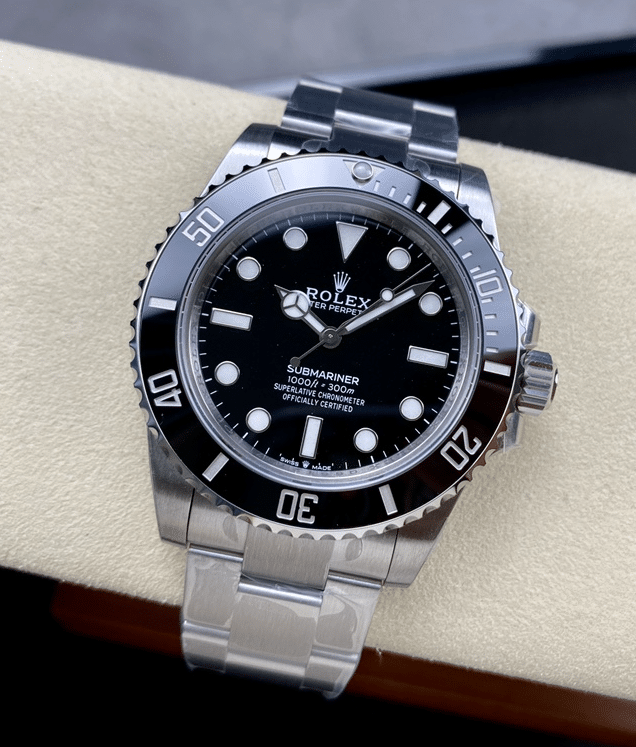
On models such as the Replica Submariner 116610 or 126610, the relationship between bezel height, dial recess, crystal profile, and hand thickness defines the entire visual balance. A sapphire crystal that is overly transparent may appear “high quality” in isolation, yet diverge noticeably from the warmer, slightly muted optical behavior of the genuine watch. Hour markers that are marginally thicker can improve visibility while simultaneously breaking the original spacing logic.
Factories such as Clean/VS are often recognized for strong external finishing. That strength is real. But visual accuracy is not about intensity. If a detail attracts attention when it should blend into the whole, it is usually incorrect, no matter how well executed.
Mechanical Logic
Mechanical logic is where expertise becomes unavoidable.
A Submariner is inseparable from the architecture of the Rolex 3135 and 3235 calibers. Any serious evaluation must consider how closely a replica movement follows that layout and operating behavior. Cloned 3135-based movements differ significantly in stability, gear tolerances, and long-term service behavior depending on execution. These differences do not appear on day one, but they surface with use.
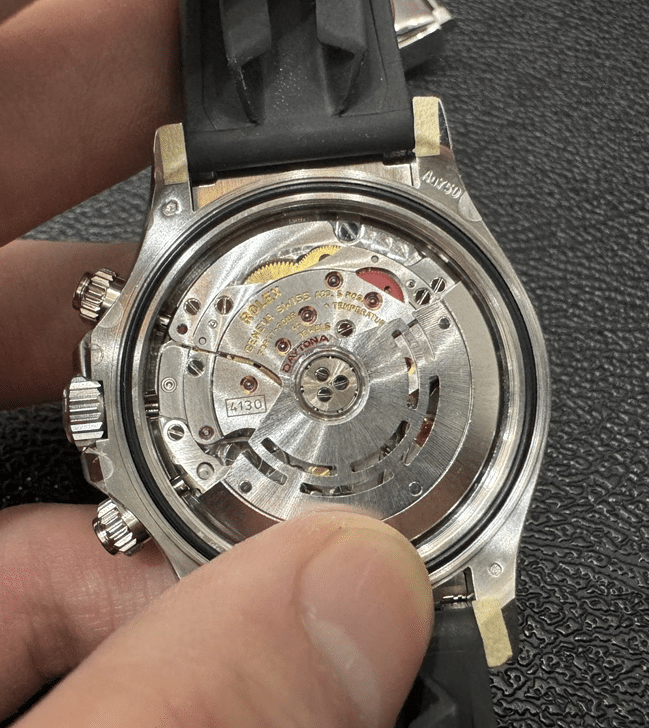
The Daytona makes this distinction even clearer. Integrated chronograph calibers such as the Dandong 4130 and 4131 represent a fundamentally different solution from stacked chronograph constructions. Pusher feel, chronograph reset behavior, and power delivery are direct consequences of this architecture. This is why factories like VS and Clean, both working with true integrated 4130/4131 layouts, occupy a different tier of discussion than factories relying on modular solutions.
“Swiss” as a label explains very little. Architecture explains almost everything.
Structural Consistency
Structure determines whether a watch continues to feel correct after months or years, not minutes.
Center axle rigidity, case wall thickness, bracelet curvature, and end-link geometry all influence wear behavior. On paper, the dimensional differences between factories can appear minor. On the wrist, they accumulate. A bracelet that is too flat compared to the genuine loses articulation. A case profile that matches diameter but lacks vertical depth often shifts balance once weight is introduced.
Factories like VS are frequently noted for prioritizing structural fidelity, particularly in case geometry and bracelet articulation. Others may emphasize surface finish first. Neither approach is universally right, but the consequences are predictable. Structural shortcuts rarely reveal themselves immediately, which is precisely why expertise must look beyond first impressions.
This is the line between inspection and judgment. Inspection confirms alignment. Judgment anticipates behavior.


Factory-Level Differentiation
No major factory produces flawless watches across all models.
VS, Clean, PPF, and ZF each developed strengths through repetition. Some are more consistent in movement execution, others in dial work or case finishing. As a result, the same reference can feel fundamentally different depending on where compromises were made. Declaring a single factory “the best” ignores this reality and usually collapses under close scrutiny.
Expertise is knowing where to look on a specific model and understanding which compromises remain visible over time. Every factory leaves fingerprints. The skill lies in recognizing which ones matter.
Experience Accumulates Judgment
Judgment does not form from a single comparison or teardown. It accumulates through repeated exposure.
Versions that impress immediately often reveal weaknesses in movement stability or structural wear months later. Others, initially understated, gain credibility through consistency. Over time, patterns repeat themselves: how certain 3135 clones age, how specific 4130 executions behave, how bracelet geometry responds to daily use.
Mistakes are part of this process. Revisiting incorrect conclusions sharpens future evaluation. Expertise is not certainty. It is the ability to refine judgment without discarding direction.
How This Expertise Supports Our Work
This accumulated understanding informs how we evaluate factories, shapes our quality standards, and anchors our long-term commitment to clarity over hype.